Creating an Inclusive Gym for LGBTQ+ Members | 4 Essential Tips

It’s Pride Month so businesses are hopping on the rainbow train but how inclusive are they really? Gyms are traditionally a site of toxic masculinity, policing body image ideals, and microaggressions. This can create an unpleasant and unsafe environment for all members and especially members of of the LGBTQ+ community. Around 7% of the U.S. population—close to 24 million people—falls somewhere within the LGBTQ+ spectrum. An estimated 1.5 million of those people are trans/gender diverse. These individuals are in your community and gyms and they deserve to feel included, connected, and cared for just as much as other members.
Exercise can greatly improve not only physical health but mental and emotional health as well. Individuals in the LGBTQ+ community statically have higher rates of mental health concerns due to discrimination and oppression.
Here are four practical ways gyms can create an inclusive vibe all year long to ensure a welcoming and safe environment for all members (at no cost to them!).
- ELIMINATE ALL GENDERED LANGUAGE
The outdated male/female gender binary persists in fitness culture. We see this gender binary even in referring to barbells as male or female, when we could simply say 35lb and 45lb bars. Let’s look at some examples of how gendered language in fitness can be harmful to the LGBTQ+ community and other ways we can communicate the same message.
Many fitness standards are set based on a gender binary typically found in weights, calories, equipment, etc. used for workout or athletic standards for both genders. A community gym with general population members simply doesn’t need standards based on gender due to the wide array of members and abilities. An easy fix is offering 2-3 options in programming for each workout based on degree of difficulty. Members should know which option is right for them based on an initial assessment and their current abilities. Not only is this practice more inclusive, it invites athletes to pick what is best for them based on their ability. Gendered language can cause division, and gyms should build communities— not divide them.
Splitting members into groups based on gender should be eliminated from a group setting as there are people who identify outside the gender binary who are immediately excluded. Let’s come up with other ways to get members into groups that don’t discriminate based on gender identity, sexual identity, or physical appearance.
Defaulting to gender neutral pronouns (they/them) or using a member’s name when talking to or about them can eliminate the chance of misgendering a member.
Gender specific language such as ‘hey guys’ can easily be swapped out for more inclusive language including: ‘welcome, everyone!’, ‘hey team’, or ‘hi athletes’.
In Emily’s experience, “I checked out a gym recently and during my intake, the owner asked about my husband to which I had a wave of uncertainty roll over me not sure if I was safe to say ‘actually, I have a wife.’” These harmful assumptions cause people to feel excluded and unsafe which can ultimately lead them not joining or maintaining membership at a gym. Using the word “partner” costs you zero dollars but will pay off in terms of member inclusivity.
2. ZERO TOLERANCE POLICIES
Gyms must be safe for every member so it’s essential to have zero tolerance policies for any type of hate speech or discrimination. Staff must also hold each other and members accountable for enforcing them. If you or your team hear harmful comments, it’s your responsibility to call out the perpetrators and ensure the safety of the member. Your actions must match policies.
Creating a culture that celebrates each other and an atmosphere that allows a member to be themself is crucial. Coaches need to set the standard of a welcoming and inclusive environment.
In Megan’s experience, “As a non binary individual who had top surgery I love working out without a shirt on. However, due to my name people perceive me as feminine and so I have never worked out in a space that feels safe for me to do that without judgement or harm being cause to me.”
3. GENDER NEUTRAL BATHROOMS
At a bare minimum, queer, trans, and gender diverse folx need to feel comfortable using the bathroom, changing into their workout clothes, and taking a shower at the gym. If a gym only has ‘male’ and ‘female’ labeled options for locker rooms it is massively exclusive especially for trans and gender diverse members. Designing gender neutral restrooms and locker rooms takes very little effort and goes a long way toward creating an inclusive environment.
Additionally, members who identify outside the gender binary should not be forced to use single stall restrooms. Gyms need to have policies that state that athletes can use the restroom/locker room that fits their body. PS the signage of your locker rooms matters! Let’s do away with the binary stick figures.
4. INCORPORATING INCLUSIVE MESSAGING
Think about how your brand’s messaging reads to all current and potential members. Are your social media posts, website, and member paperwork inclusive? If your membership paperwork asks about gender, male and female should not be the only options.
All marketing and messaging should be inclusive of all members and prospective members. This includes using inclusive language, having policies that respect everyone and making a daily effort to make sure your space is inclusive and welcoming. Social media posts should avoid gendered language and promote people of many identities. Members of marginalized communities need to see that they will be actively accepted and celebrated in your gym. This shouldn’t only happen during pride month but should be visible year round.
Include pronouns with staff bios on your website which helps to break down the harmful idea that you can know someone’s pronouns based on how they look.
If you are a member of the LGBTQ+ community, finding a gym atmosphere that actively celebrates you and creates a space where you feel safe to test your physical abilities is crucial.
Groth Fit is queer owned and is designed specifically for everyone.
Special thanks to Megan Gour of M Gour Consulting for their contributions to this article.
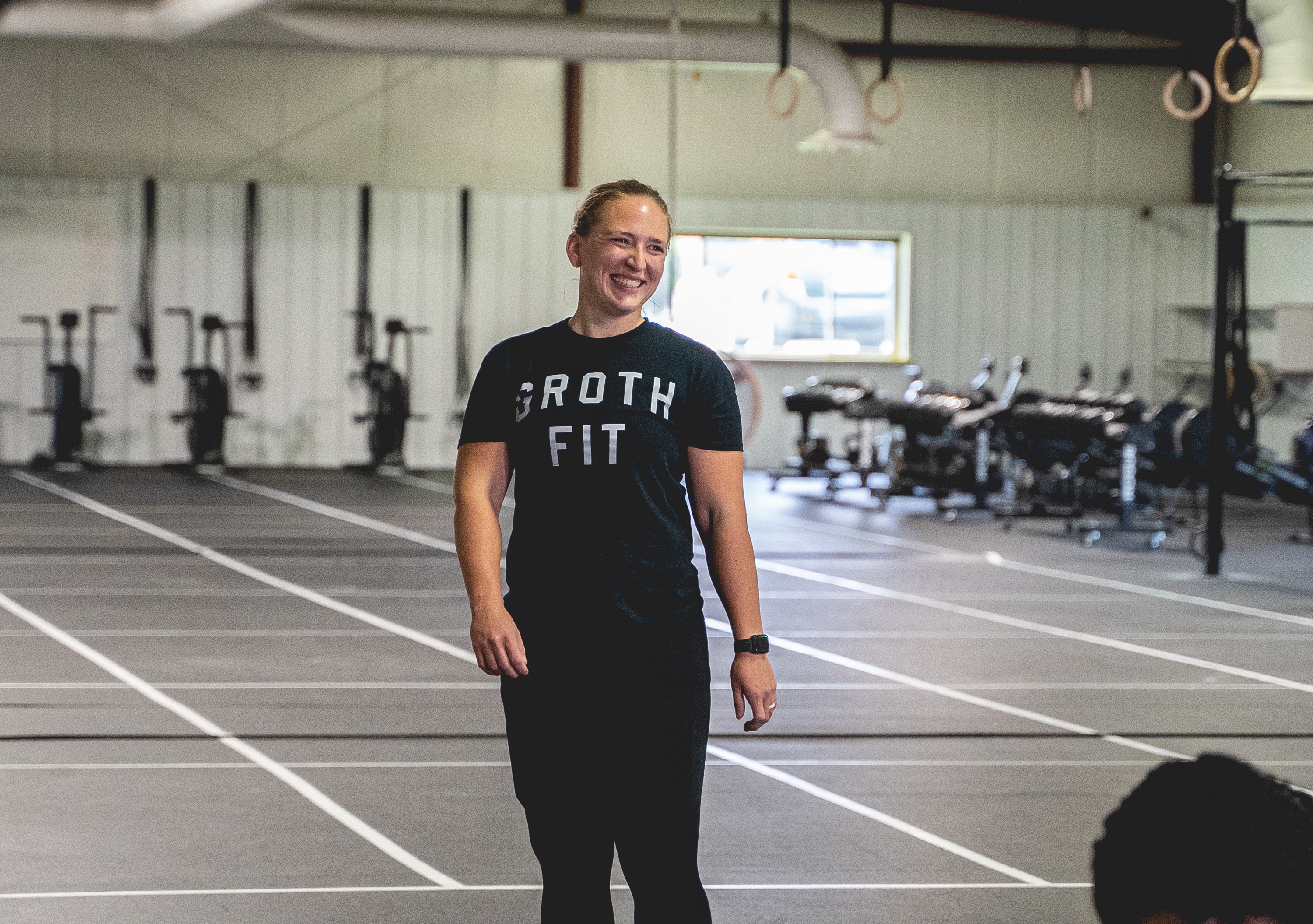
Emily Groth (she/her)
As the owner and founder of Groth Fit, Emily is committed to breaking old stereotypes about training and making it more sustainable and accessible than ever. She believes that every single person should be celebrated in the gym and have a coach that creates a safe space for testing physical abilities. Groth Fit exists to enhance your life outside the gym.

Megan Gour, LCSW (they/them)
Megan is a Licensed Clinical Social Worker who has been working for 10+ years specializing in supporting transgender, gender diverse, and queer young individuals. They have spent their career creating safe places for LGBTQ+ individuals through advocacy and education. Member of Groth Fit.
Mention this article and receive 25% off consulting fees with Megan through mgourconsulting.com.
 Groth Fit